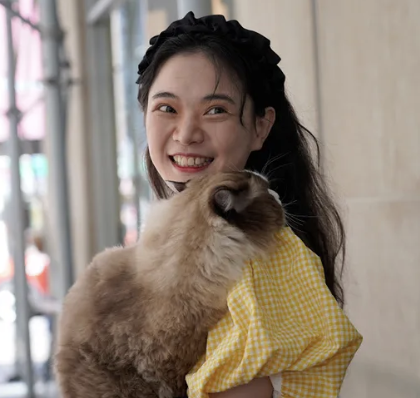
Short Bio
I am deeply interested in how linguistic representations, meaning, and cognition emerge from lower-level sensory input, and how these representations are transformed into linear sequences of articulatory or gestural motor plans. The interface between linguistic representation and audition, vision, and motor systems is both complex and remarkably efficient, enabling real-time language use, which is really fascinating to me. In addition, after these sensory input become linguistic signals, I am also interested in how they are processed incrementally in various scenarios: non-native processing, repeated processing, and with illusory structures.
I hope to use neural imaging methods and related signal analysis methodologies to peek into the brain. I came to appreciate that brain itself and the recorded brain signal are extremely noisy. This, as a result, requires both carefully designed, theory-driven experiments and technical analytical skills, and I am actively developing in both directions.
I graduated with M.S. in Neuroscience and Education from Teachers College, Columbia University, during which time, my biggest motivation came from how much we can “look inside” the brain, and also from how much we still don’t know about the cognitive brain. I wrote my Master’s Thesis on the neural mapping for audio-visual integration in non-native speakers.
Before March 2023, I was an English major and language educator. I loved to sit in the classroom and think about what was happening in those language learning brains, including my own.
When not busy figuring out human language and computer language (coding), I love figuring out cat language, interior design, and new cooking recipes.